
Millions of Australians are already reaping the benefits of solar energy for creating a green, sustainable future.
But do you know what drives this transformative change and increases the solar adoption rate?
Enter the world of ‘Solar Panels’, the ultimate leading player to transform the entire solar energy system.
As solar technology evolves, a new wave of innovative materials transforms traditional solar panel manufacturing. These rapid strides have made solar panels more efficient, affordable, and environmentally friendly in recent years.
So, what new materials are used in solar panel manufacturing?
Let’s dive into this blog and explore the latest trends, benefits, and future scope of solar panel technologies in Australia!
Solar panels usually trap sunlight with their semiconductor materials like silicon. When sunlight hits these materials, it generates electron flow. The energy is then converted into usable electricity using photovoltaic methods, which helps to power residential or commercial buildings.
Among the different types of solar panels, only three are considered the most common and widely used in the solar panel industry. These are Monocrystalline, Polycrystalline, and Thin-Film Solar Panels.
Solar panels efficiency, lifespan, and adaptability change with their types. Knowing each in detail will help you choose the most suitable and cost-effective option for your home.
From affordable polycrystalline panels to premium and most efficient monocrystalline panels, the right panel can save energy bills and ensure energy security. Solar panels can also positively impact the environment by reducing the carbon footprint.
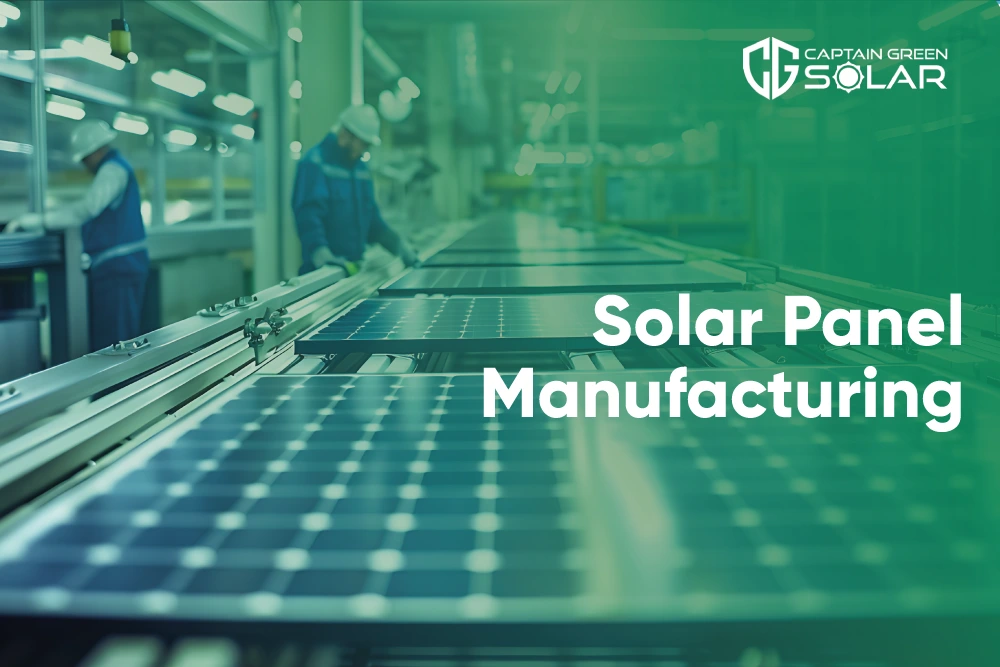
1. In the initial phase, raw silicon is extracted from the quartz and purified using a chemical process.
2. The purified silicon is then crystallized to form large chunks, which are further sliced to create thin silicon wafers (200-300 micrometres).
3. These pure thin wafers are then treated with phosphorus or boron to create p-type or n-type semiconductors. This forms a texture and enhances their electrical properties.
4. After that, the wafers are coated with an anti-reflective layer to reduce light loss.
5. The solar module is created by connecting these cells parallelly or in a series. It is then encapsulated like a sandwich with protective materials such as glass.
6. An aluminium frame gives the encapsulated cell structural support, and the back sheet at the rear side provides protection and insulation.
7. Finally, the assembled panels are tested for efficiency and durability before being packaged and shipped for on-site installation.
The evolution of materials in solar panel manufacturing has sparked a dynamic battle between traditional and advanced solar panels.
Both are competing for dominance in the renewable energy landscape. But nowadays, people are more concerned about sustainability.
Besides efficiency, they look for an energy system that ensures reliable energy output and offers versatility to adapt to diverse environments and user needs. There comes the technological advancement of solar panels with their new innovative manufacturing materials.
Despite being effective, traditional solar panels have several issues. For example, they are bulky and have efficiency limitations. They also offer a shorter lifespan and require vast space, which ruins buildings’ aesthetics.
Conversely, cutting-edge technology in new solar panel systems, such as Perovskite cells, CIGS, and bifacial solar panels, significantly improves its efficiency and durability.
These advancements in panel design help push the boundaries of what solar energy can achieve to fulfil Australia’s renewable energy target.
The table below illustrates a detailed comparison between traditional and advanced solar panels:
| Feature | Traditional Solar Panels | Advanced Solar Panels |
|---|---|---|
| Type of Panels | Monocrystalline and Polycrystalline solar panels | Perovskite, Bifacial and thin film solar panels |
| Efficiency | Conventional solar panel efficiency ranges between 15-20% | Usually, the efficiency rate is around 20-30% but can rise to 40% depending on the panels |
| Lifespan and Durability | Approximately 10 to 20 years. | 25 to 30 years, and it's improving with the technological advancement |
| Cost Estimation | Lower initial cost | Higher upfront cost |
| Energy Output | Reduced energy output in shaded areas | Better in capturing light from low angles, ensuring maximum energy output |
| Impact on Environmental | Minimal waste | Explores using sustainable materials and recycling facilities for solar panels to ensure less waste production |
| Adoption Rate | Well established | Growing rapidly, it's perfect for people who want sustainable energy solutions |
| Innovative Feature | Resistance to weather conditions and requires less maintenance | Smart technology with advanced tracking or monitoring system. |
| Installation | Follows standard mounting system | Flexible for installing any palace, for example, building integrated system solar facades or windows |
The latest innovation in solar materials has positively impacted the solar industry in Australia and opened a new horizon.
These advanced, new solar panel technologies in Australia pave Australia’s path to clean electricity for a sustainable future.
Now you must be wondering how! Let’s share it in detail.
So, here’s a closer look at how these solar panel innovations are shaping a sustainable future:
Perovskite Solar Cells are an excellent alternative to silicon-based solar panels. These new panel designs have super light absorption features and require low cost to produce, which makes them a leading substitute.
Solar cells made with perovskite are lightweight, flexible, half-transparent, and can achieve around 33% efficiency. Researchers are working together to further enhance the strength and longevity with advanced technology and in-depth research.
Bifacial solar panels are a transformative technology that opens up a realm of possibilities for their application in diverse settings. These panels can capture sunlight on both sides of the panel, thus improving efficiency and energy output up to 30%.
This solar panel innovation also helps to improve building aesthetics with its versatile installation option, which allows for smooth panel installation.
While people seek a sustainable replacement for panel material, Organic Photovoltaic can be a top-notch pick. OPV materials use carbon-based substances rather than silicon to convert sunlight into electricity.
They are lightweight, flexible, and customizable. Moreover, they reduce the release of toxic and harmful substances into the atmosphere, making them a viable alternative for green energy solutions.
Though OPVs’ 19.7% efficiency is much lower than silicon solar panels, their unique features could make them vital for the future of solar energy.
They are helping to meet the growing demand for clean and renewable energy sources in Australia.
Building-integrated photovoltaics (BIPV) serves dually by providing shelter and lighting while also fulfilling the overall functionality of the building. These innovative materials are designed to perfectly blend technology with the building architecture.
These BIPV materials are commonly used for solar windows, facades, roofing tiles, and shading devices. They allow the building to look attractive without hampering its visual aesthetics.
Quantum dot solar cells are a type of photovoltaic technology that uses quantum dots, which are tiny semiconductive particles. These nanocrystal materials can be adjusted for optimal light absorption.
They also have a higher conversion efficiency, exceeding 25%, than any classic solar panel’s efficiency level.
Did you ever hear about CIGS?
CIGS, which stands for Copper Indium Gallium Selenide, is a new and advanced semiconductor material used in thin-film solar panels. Because of their light and compact features, they are available in different shades and are highly adaptable.
It has very cheap manufacturing costs and typically has an efficiency rate ranging from 10% to 22%, depending on the technology and manufacturing processes used.
However, the highest efficiencies reported in laboratory settings can exceed 23%. This makes CIGS competitive with other thin-film technologies and some crystalline silicon solar panels.
Transparent solar cells are a cutting-edge technology that captures sunlight using organic photovoltaic materials or specific semiconductor compounds. They are designed to absorb specific wavelengths of light with their transparent surface.
You can integrate these panels into your building windows or use them as part of building facades.
This enables energy production and saves electric bills with natural lighting while improving your buildings’ aesthetic design.
Tandem solar cells are considered a photovoltaic technology that combines two or more layers of solar cells. This design helps to capture a broader spectrum of sunlight, increasing efficiency and electricity production rate.
These panels consist of multiple layers, of different materials, like a perovskite layer on top of a silicon layer to absorb different wavelengths of light.
The top layer absorbs higher-energy light, such as blue and ultraviolet, while the lower layer captures lower-energy light, such as red and infrared.
Harnessing the sun’s power with advanced solar panels is not just a step towards sustainability; it’s a leap towards a cleaner, brighter future for Australia.
With every ray of sunlight captured, advanced solar panels turn potential into progress. They power our lives while protecting our planet.
Are you thinking about how new materials in solar panel manufacturing can benefit?
In the following part, let’s have a glance at the advantages of new tech solar panels:
Using new and advanced materials, such as perovskite solar cells and bifacial panels, can convert sunlight into electricity more efficiently than old solar panels.
Recent innovations in solar panel materials are making solar more affordable and accessible.
These advanced materials are easy to source and require less energy to extract and produce. Thus, they help reduce costs and minimize resource exploitation.
The Australian government also offers many rebates and incentives that can reduce the higher upfront cost, increasing the solar adoption rate.
Classic solar panels were bulky and took up a lot of space to generate sufficient power. However, the new materials make the solar panels compact and small, which is easier to install and transport.
New materials in solar panel manufacturing make the panels robust and durable. They are also more resistant to environmental factors like UV rays and temperature fluctuations.
Also, the flexibility of these advanced materials enables solar panels to be integrated into various surfaces. You can incorporate them into windows, roofs, or walls for capturing solar power.
For many Australian homeowners, these new materials can be exciting in creating a visually appealing, energy-efficient home.
They also encourage the adoption of solar energy in residential and commercial buildings in urban areas, which results in a healthier, greener life with improved aesthetics.
If you live in an area with low sun exposure, this innovative, advanced solar panel is the most effective option. Some can perform better in low light, mitigating the environmental and seasonal barriers.
New materials in solar energy contribute to a more sustainable energy ecosystem. They reduce the use of harmful and toxic substances in solar panel-making.
The innovation of biodegradable solar panels also reduces waste and environmental concerns at the end of their life cycle.
Advanced materials can facilitate the incorporation of smart technologies, like energy storage systems and grid management tools, improving the overall energy efficiency of solar panels.
Recent material advancements are revolutionizing solar panel manufacturing, making solar energy more efficient, affordable, and accessible. Breakthroughs in perovskite solar cells, bifacial technology, quantum dots, and tandem solar cells are pushing efficiency limits beyond traditional silicon-based panels. Additionally, innovations in transparent solar materials, flexible solar films, and sustainable manufacturing practices are paving the way for more versatile applications and eco-friendly production methods.
As research continues, these advancements promise to accelerate the global shift to renewable energy, making solar power a more viable and dominant source of clean energy. With improved durability, efficiency, and cost-effectiveness, the next generation of solar panels will play a critical role in meeting the world's growing energy demands while reducing carbon footprints.

Captain Green Solar is one of the Top Solar Companies in Australia. Established in 2010, we are the Trusted Name in Solar for over 16 Years!
